PhD 1:
Epitaxial Si-based materials for the deep nanoscale
Work on high-purity silicon epitaxy and hybrid epitaxy for localized ion implantation.
PI: Moritz Brehm,
Johannes Kepler University, Linz
msca doctoral network
QuEST: Educating tomorrow’s European researchers in silicon quantum electrodynamics at the deep nanoscale.
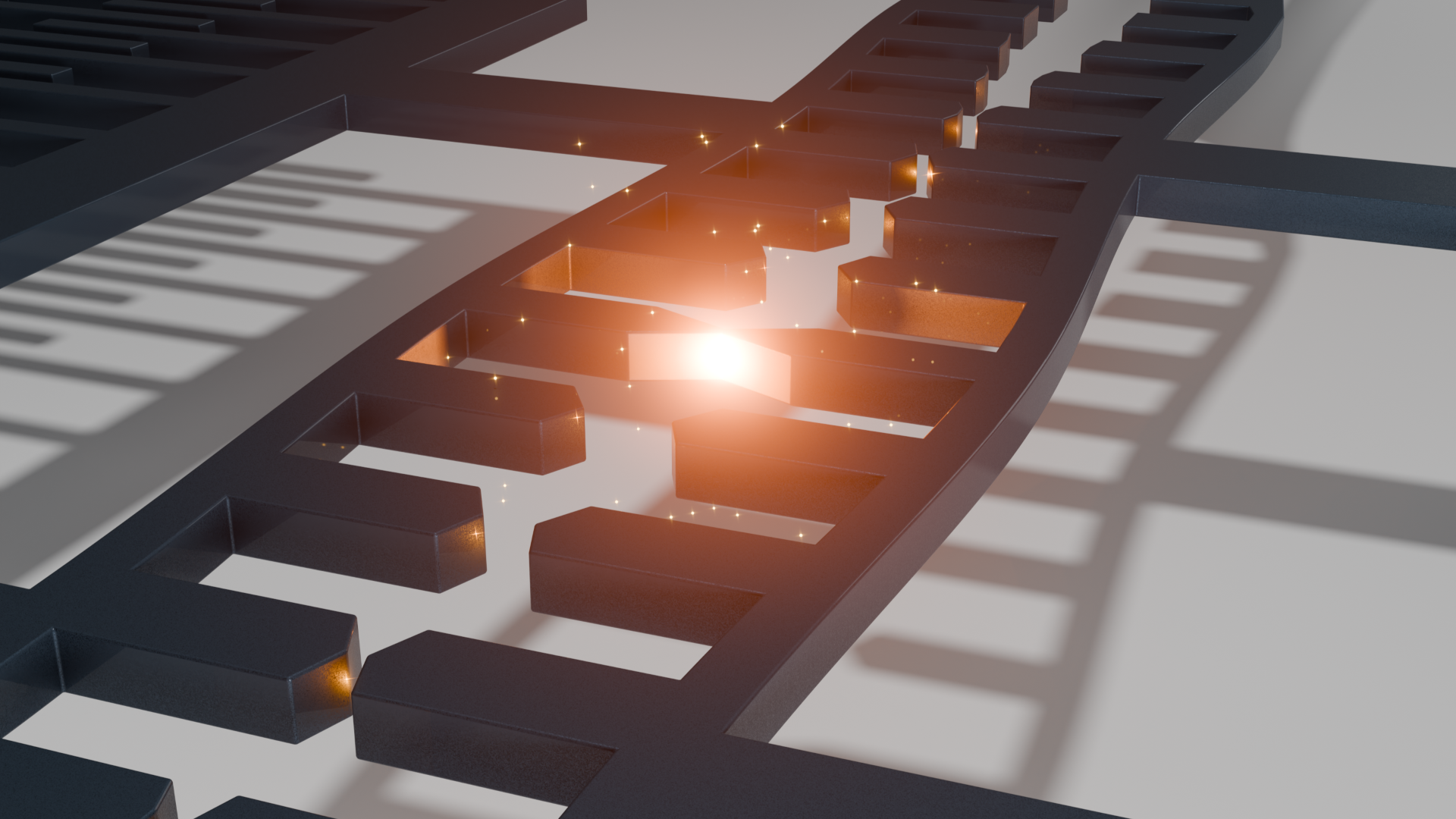
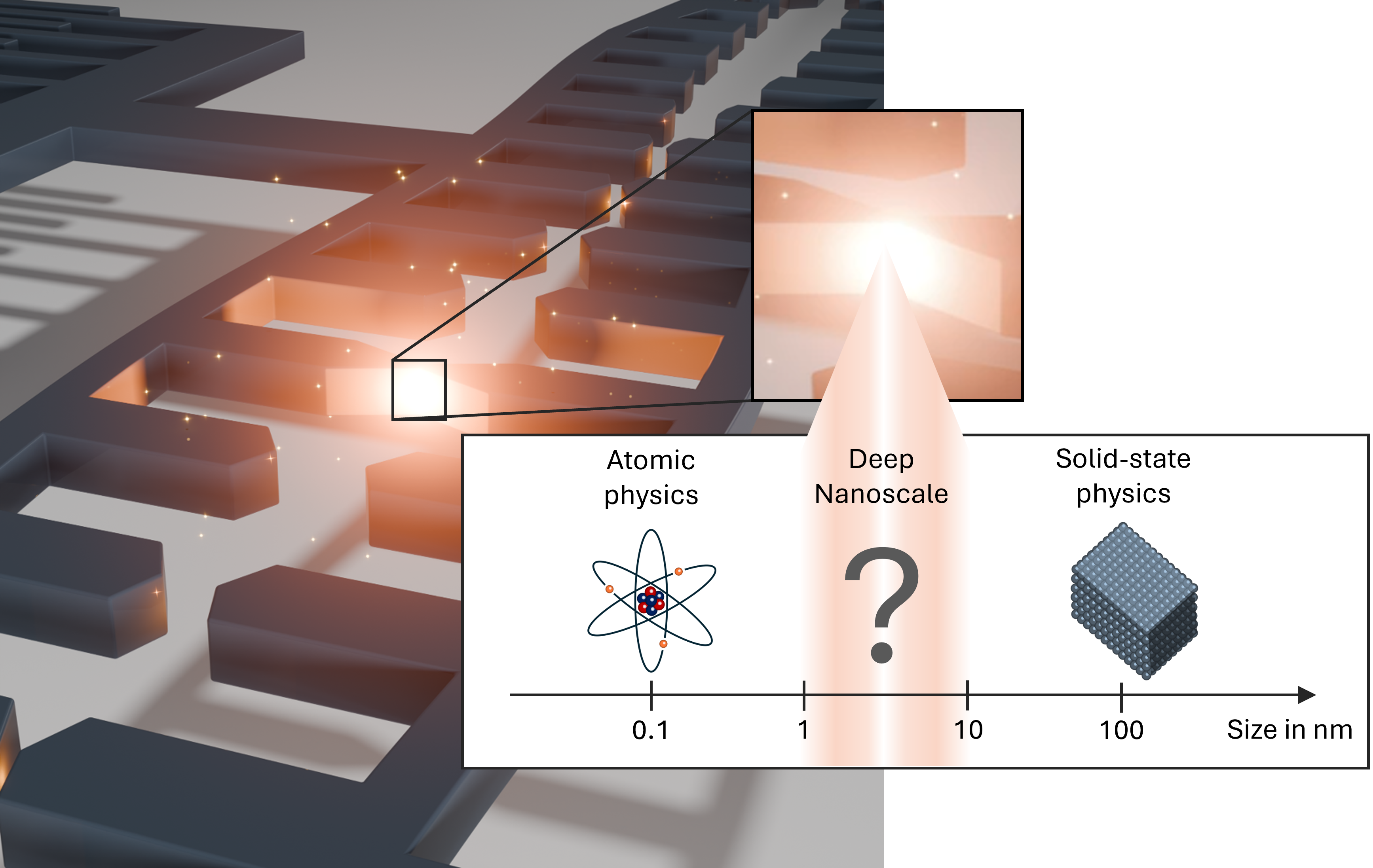
Recent breakthroughs have shown that silicon nanostructures with critical dimensions in the range of 1-10 nm - which we refer to as the deep nanoscale - are now accessible for the combination of optical, mechanical, and electronic physics experiments.
This forms the basis for the vision of QUEST: A highly ambitious research training program with the objectives to explore and exploit the confluence of optics, mechanics, and electronics at the deep nanoscale.
We will combine advanced numerical design with quantum theory to measure the mechanical forces resulting from quantum vacuum fluctuations, explore novel emitters and fast electron interactions to probe the properties of photonic cavities, develop new device concepts in optomechanics, and push the frontier of semiconductor material growth and fabrication nanotechnology.
The QuEST doctoral network will design and fabricate optical nanocavities with extreme light confinement and embedded color centers for electronic interactions as well as designable vibrations and controllable tuning via electromechanical actuation.
In combination with advanced experimental techniques, we will leverage this material platform for next-generation quantum technology based on silicon quantum electrodynamics at the deep nanoscale.
This highly interdisciplinary and entrepreneurial undertaking brings together research groups from across Europe to educate a new generation of doctoral candidates in the full stack of skills needed in silicon quantum photonics technologies, including theory, modeling, design, material growth, nanofabrication, and a wide range of experimental techniques - as well as communication, collaboration, and leadership skills.
Build your future alongside 14 other PhD students in our highly collaborative network across Europe starting in the spring of 2027.
PhD 1:
Work on high-purity silicon epitaxy and hybrid epitaxy for localized ion implantation.
PI: Moritz Brehm,
Johannes Kepler University, Linz
phd 2:
Work on isotopic engineering of colour centres as deterministic and scalable single-photon and spin-controlled emitters.
PI: Yonder Berencén,
Helmholtz-Zentrum Dresden-Rossendorf
phd 3:
Work with extreme nanofabrication of quantum light sources based on spectral and spatial alignment of colour centres to nanoelectromechanically tunable silicon bowtie cavities.
PI: Ali Nawaz Babar,
Lizard Photonics
phd 4:
Work on novel surface passivation strategies and the use of surface forces for nanoscale self-assembly.
PI: Ali Nawaz Babar,
Lizard Photonics
phd 5:
PI: Claus Ropers,
Max Planck Institut für multidisziplinäre Naturwissenschaften
phd 6:
PI: Claus Ropers,
Max Planck Institut für multidisziplinäre Naturwissenschaften
phd 7:
Work on high-accuracy Casimir-Polder force measurements with photonic crystals.
PI: Gabriel Dutier,
Université Sorbonne Paris Nord
phd 8:
PI: Athanasios Laliotis,
Université Sorbonne Paris Nord
Phd 9:
Work on mechanical nonlinearities for dynamical coupling in cavity optomechanics.
Pi: Daniel Navarro Urrios,
Universitat de Barcelona
phd 10:
PI: Costanza Toninelli,
European Laboratory for Non-Linear Spectroscopy
phd 11:
PI: Søren Stobbe,
Technical University of Denmark
phd 12:
Work on modelling and simulation of individual multilevel emitters interacting with complex and deep nanoscale silicon structures.
PI: Kurt Busch,
Humboldt-Universität zu Berlin
phd 13:
PI: Francesco Intravaia,
Humboldt-Universität zu Berlin
phd 14:
PI: Philip Trøst Kristensen,
Technical University of Denmark
phd 15:
PI: Philip Trøst Kristensen,
Technical University of Denmark



Philip Trøst Kristensen Senior Researcher Department of Electrical and Photonics Engineering ptkr@dtu.dk